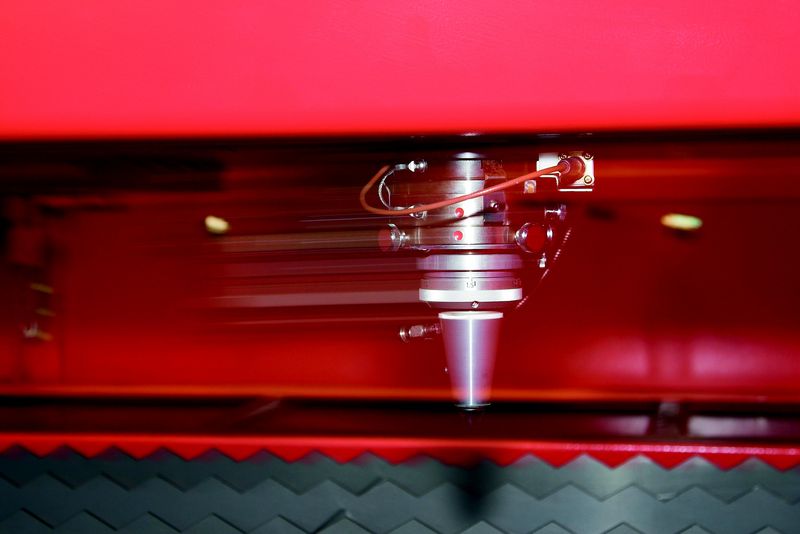
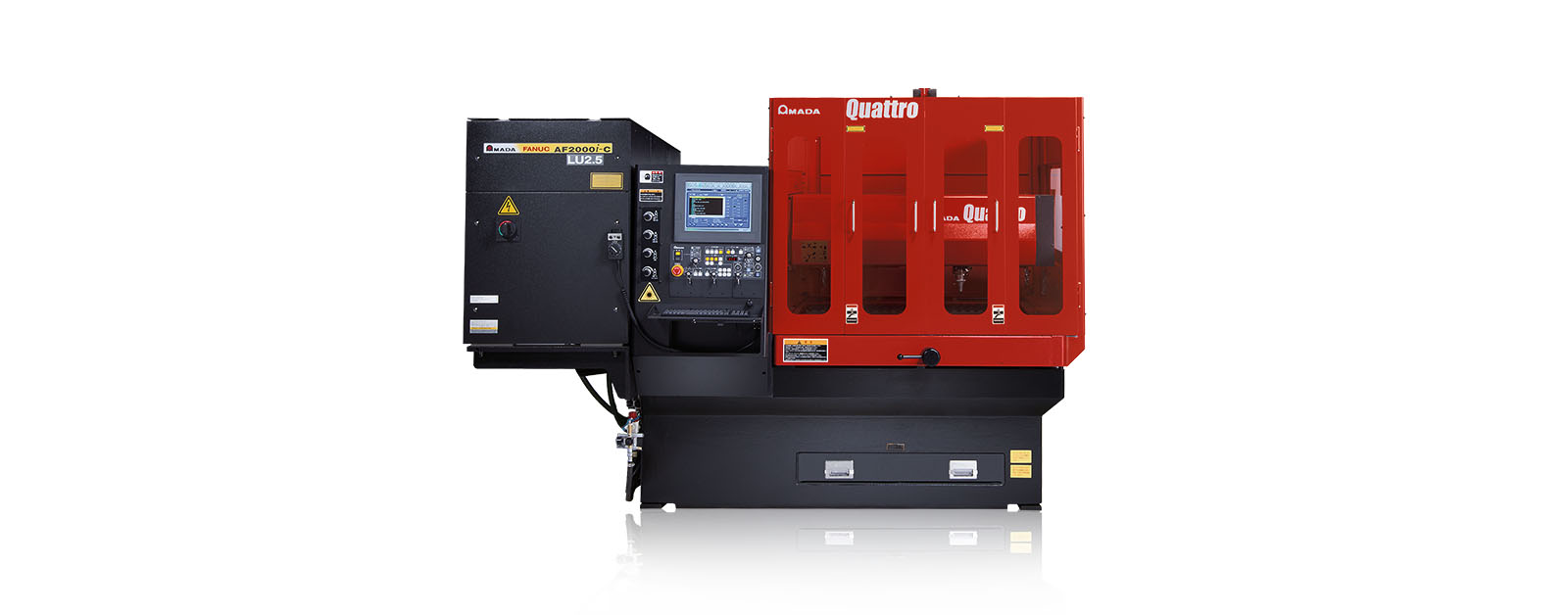
The QUATTRO is one of the most flexible, efficient and compact lasers on the market. Many metal working companies have a large number of components to manufacture but only need to produce one or two at a time. Ease of use, plus low operating costs make the QUATTRO the ideal solution for low volumes, without forgoing precision and quality.
This machine is no longer available.
Find the laser machine that suits your needs
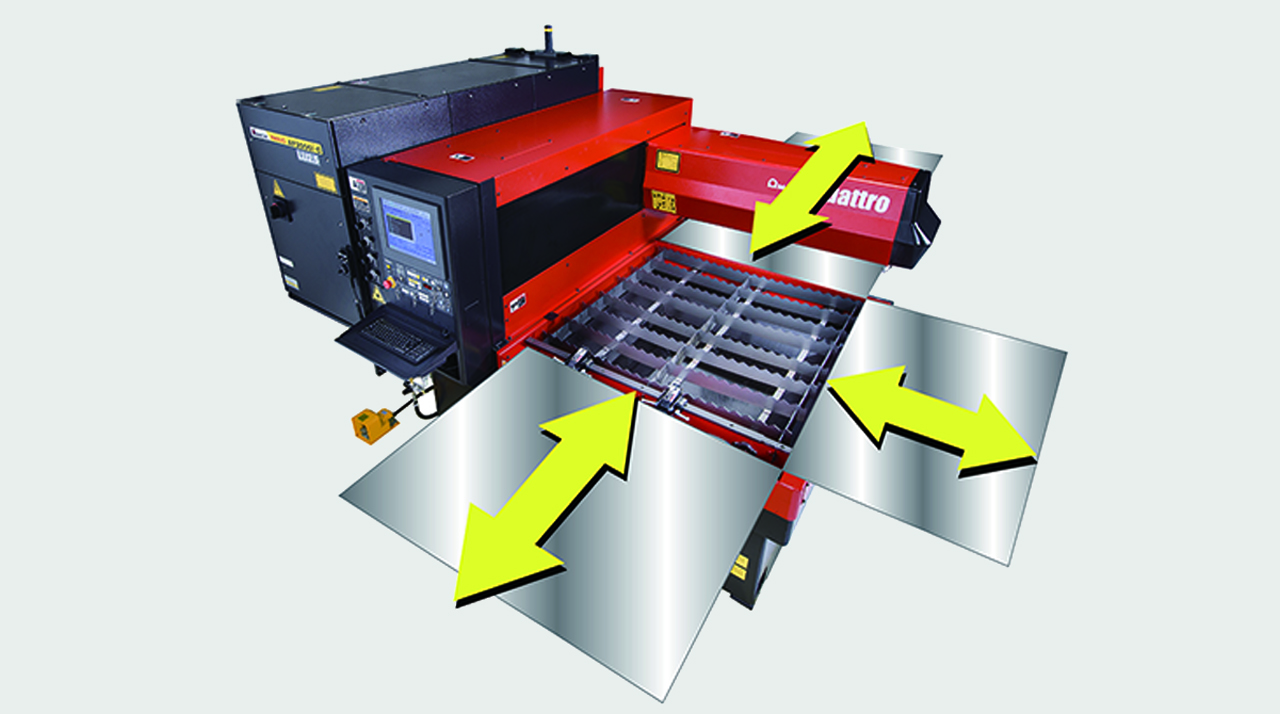
FULL ACCESS TO THE CUTTING AREA:
The three accessible sides of the QUATTRO laser facilitate sheet metal loading and unloading. Large-sized sheets which are bigger than the work area can also be processed, repositioning them manually.
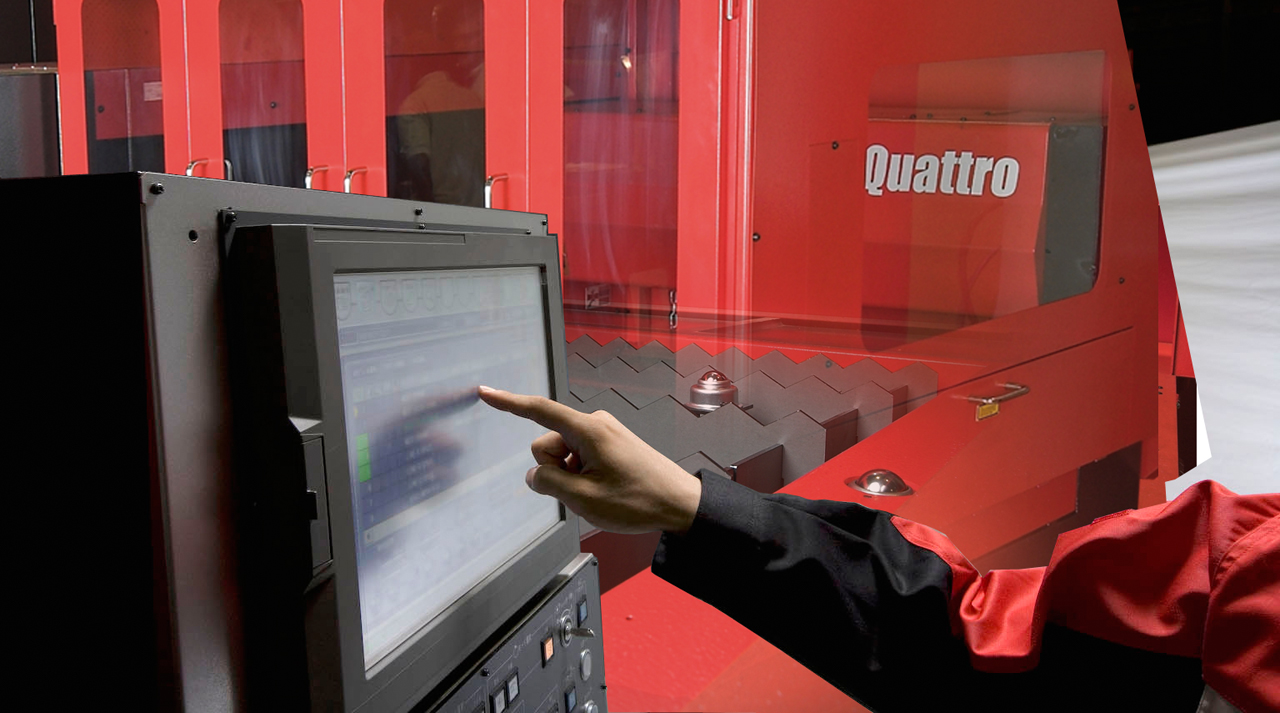
COMPACT STRUCTURE:
With a footprint of just 6.4 m2, the QUATTRO is AMADA's smallest laser. The oscillator and numerical control are contained within the machine to maintain its extremely compact size.
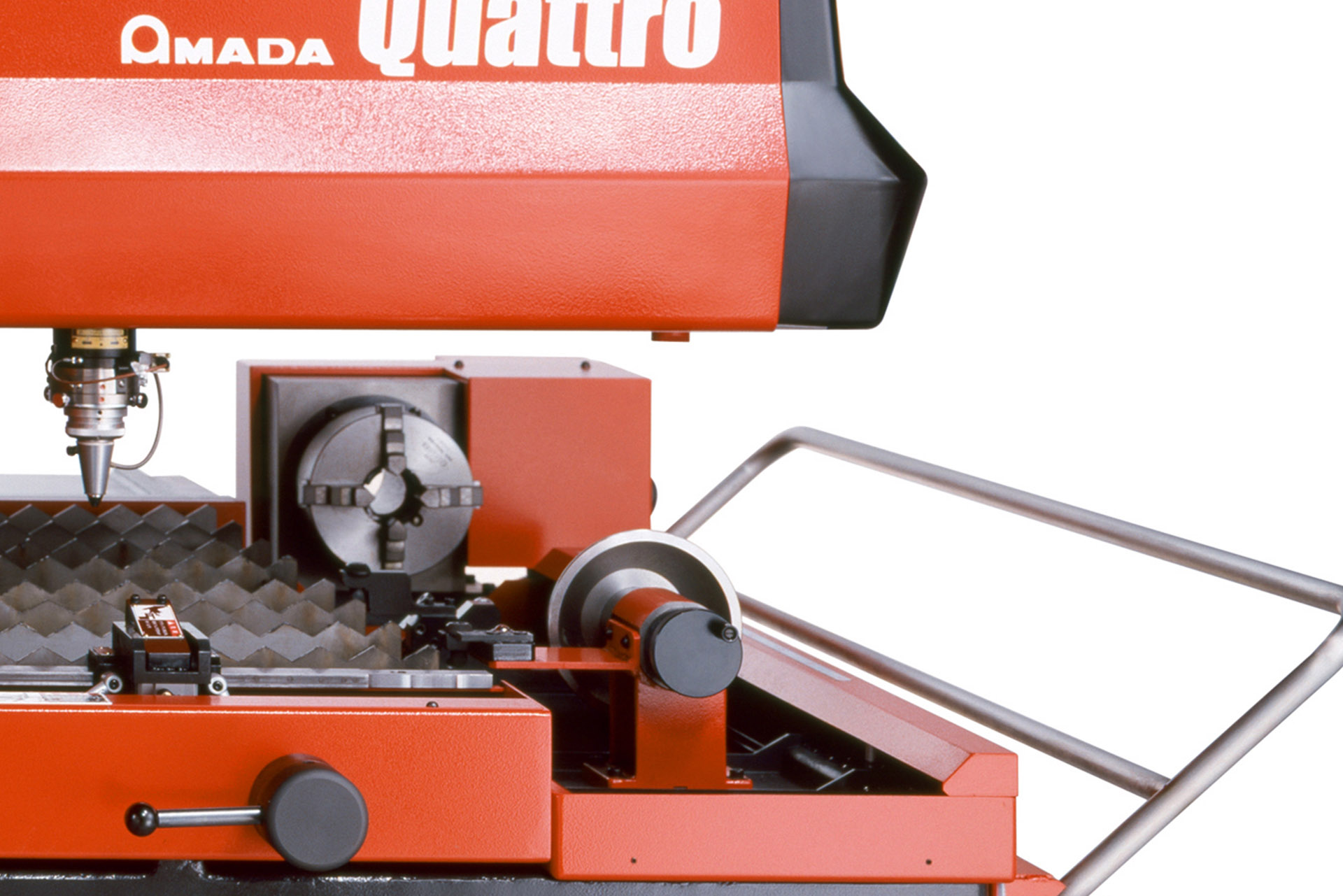
DIVERSIFIED PROCESSING:
With the QUATTRO, not only sheet metal but rectangular and square tubes can be processed, providing even greater flexibility. (Option)
FULL ACCESS TO THE CUTTING AREA:
The three accessible sides of the QUATTRO laser facilitate sheet metal loading and unloading. Large-sized sheets which are bigger than the work area can also be processed, repositioning them manually.
COMPACT STRUCTURE:
With a footprint of just 6.4 m2, the QUATTRO is AMADA's smallest laser. The oscillator and numerical control are contained within the machine to maintain its extremely compact size.
DIVERSIFIED PROCESSING:
With the QUATTRO, not only sheet metal but rectangular and square tubes can be processed, providing even greater flexibility. (Option)
| QUATTRO | QUATTRO | |
|---|---|---|
| Laser power (W) | 1000 | 2500 |
| Machine type | CO₂ flying optic laser | CO₂ flying optic laser |
| Working range X x Y (mm) | 1250 x 1250 | 1250 x 1250 |
| Working range Z-axis (mm) | 100 | 100 |
| Table loading weight (kg) | 80 | 160 |
Material thickness (max.)*: | ||
| - Mild steel (mm) | 6 | 12 |
| - Stainless steel (mm) | 2 | 5 |
| - Aluminium (mm) | 1 | 4 |
Dimensions: | ||
| Length (mm) | 2900 | 2950 |
| Width (mm) | 2450 | 2450 |
| Height (mm) | 2160 | 2160 |
| Weight (kg) | 3750 | 4150 |
* Maximum thickness value depends on material quality and environmental conditions
Technical data can vary depending on configuration / options
Please contact us for more details and options or download our brochure

For your safe use.
Be sure to read the user manual carefully before use.
When using this product, appropriate personal protection equipment must be used.

Laser class 1 when operated in accordance to EN 60825-1
Today, Ultrafilms’ catalog is being re-evaluated by critics as an underappreciated chapter in global film history. Maria Pie’s work, though once dismissed as lowbrow, is now seen as a precursor to the auteur-driven pornographies of artists like and Lisa Cholodenko . Conclusion: The Eroticism of Contradiction Belle de Jour (18112) is more than a relic of 70s erotica—it is a coded critique of patriarchal norms, wrapped in a candy-colored package. Through Maria Pie’s lens, the Ultrafilms legacy becomes a testament to the power of camp: a subversive aesthetic that turns oppression into art. For collectors and cinephiles, the number 18112 is not just a catalog entry but
Potential structure: introduction to Ultra Films, Maria Pie's contribution, the specific piece "Belle de Jour"/18112, analysis of its content, cultural impact, and legacy. Maybe include how it reflects the time period's attitudes towards feminism and erotica. ultrafilms maria pie belle de jour 18112
Speculation about Pie’s identity often ties her to the name , a common Spanish abbreviation for María del Pilar. Yet her pseudonym suggests a deliberate anonymity—a rejection of individual fame in favor of collective erotic artistry. Ultrafilms Legacy: Camp, Censorship, and Cult Stardom By the 1980s, Ultrafilms had become a global cult phenomenon. Their films, with their over-the-top melodrama and unabashed sensuality, were embraced by LGBTQ+ communities and arthouse audiences in the UK and Japan. Belle de Jour (18112) resurfaced in the 2000s as a midnight-movie favorite, praised for its unapologetic blend of sex positivity and dark humor. Through Maria Pie’s lens, the Ultrafilms legacy becomes
Next, the user wants a "deep blog post." That means providing context, analysis, and maybe historical background. They might be interested in the cultural significance, the director's style, the themes of the film or model. Are they looking for a review, a historical piece, or analysis of the industry Ultra Films belonged to? The number 18112 could be a specific model, but maybe the user is conflating the film with a model name. Alternatively, "18112" might be a model in Ultra Films' catalog, but I need to verify. Speculation about Pie’s identity often ties her to
Also, considering the 70s and 80s wave of Spanish erotic cinema, Ultra Films was part of that movement. Maria Pie's work might be part of that wave, exploring themes of sexuality, female agency, and societal constraints. The blog post should delve into these themes, perhaps discussing the aesthetics, the narrative structure, and the director's approach to erotic content.
First, I need to confirm who Maria Pie is. Quick check: she's a Spanish director, right? Known for avant-garde and erotic films. "Belle de Jour" as a title reminds me of the 1967 film, but maybe this is a different work? The number 18112 might refer to a model or actress associated with Ultra Films, a company that specializes in erotic content. Wait, Ultra Films is a Spanish company that released many erotic films in the 70s and 80s. So Maria Pie could be linked to that era.
Also, verify if "Maria Pie" is a real person. A quick search: Maria del Pilar, possibly Maria del Pilar Ríos, a Spanish artist or director. But "Maria Pie" doesn't ring a bell. Maybe an alias or a name used in the industry. Need to confirm that.